
The market keeps asking the wrong question. It is not whether the Federal Reserve raises rates on the twenty ninth of July. It almost certainly will not. The real question is what happens when the summer ends, and on that, the odds have quietly turned.
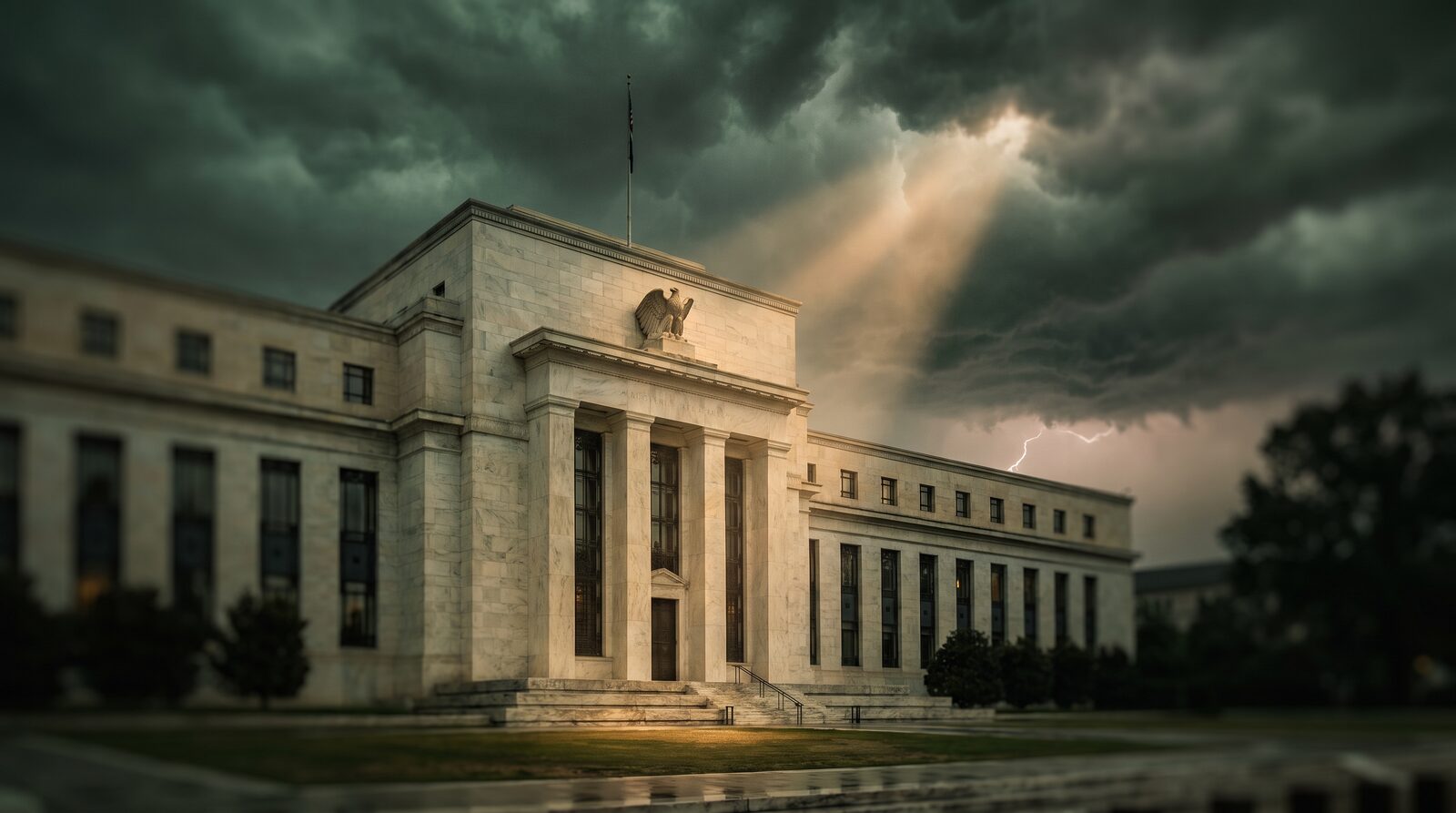
To my community of serious investors, and to every reader who prefers the ground under a claim to the noise around it, I greet you. I have spent the last fortnight reading the American data the way I read a company's accounts, line by line, looking for the line that the headline hides. And I want to correct the question before I answer it, because the question most people are asking will lead them to the wrong trade.
They ask: will the Federal Reserve raise interest rates at its meeting on the twenty eighth and twenty ninth of July? My answer is that it almost certainly will not, and that this is the least interesting thing you can know right now. The far more valuable knowledge is that the probability of a hike has not vanished. It has simply moved down the calendar, into September and October, and it has been rising there while the crowd stares at July. Understanding that shift, and what is driving it, is worth more than any single meeting.
Let me give you the number first and the reasoning after, because a forecast without a probability attached is only an opinion in a good suit. As I write, the policy rate sits at three and a half to three and three quarter percent. For the July meeting, the market implied probability of the Fed holding that rate steady is somewhere between seventy and eighty eight percent. The probability of a further increase of a quarter point is under seventeen percent, and it has been falling.
That is a remarkable collapse, because only weeks earlier the same measure put the odds of a July hike close to one in two. Something changed, and it changed fast. When the probability of an action falls from roughly forty six percent to under seventeen in the space of a single data cycle, a serious analyst does not shrug. He asks what the committee saw that the rest of us underweighted.
For the July meeting, treat a hold as the overwhelming base case. A hike this month would be a genuine surprise, and markets are not positioned for one. The interesting money is not in July at all.
Two data points did the work, and they pulled in the same direction. The first was inflation. The June reading of the Consumer Price Index came in at three and a half percent over the year, but the detail that mattered was the monthly figure. Prices fell by four tenths of a percent from the prior month, the sharpest single month decline in four years. Core inflation, which strips out food and energy and is the number the committee truly watches, eased to two and six tenths percent. After a long and stubborn fight, the disinflation the Fed had been waiting for finally showed up in the hard data.
The second was the labour market, and here the softness was even more telling. The economy added only fifty seven thousand jobs in the month, far below what was expected and far below the pace that signals a healthy expansion. A central bank that raises rates into a cooling job market is not fighting inflation. It is manufacturing a recession. The committee knows this, and the arithmetic of its dual mandate, stable prices and maximum employment, now points clearly toward patience rather than pressure.
So the picture in July is coherent. Inflation is finally cooling, hiring is stalling, and the case for holding still is close to overwhelming. If the story ended there, I would tell you the tightening cycle is finished and to position for the long glide down in rates. But the story does not end there, and this is where most commentary stops reading.
You cannot forecast this Fed without accounting for who now leads it. The chair is a known hawk, a man whose entire public record argues that the greater danger is a central bank that declares victory over inflation too soon. His arrival changed the institution's temperament. He has moved the committee away from the era of generous forward guidance, the practice of telling markets months in advance what the Fed intends to do, and toward a posture of deliberate ambiguity.
This matters more than it seems. When a central bank stops promising its next move, every meeting becomes live, and the burden shifts back onto the data. A hold in July, under this chair, is not a soft signal that the cycle is over. It is a tactical pause by a committee that has explicitly reserved the right to move the moment the numbers turn. Read his silence not as dovishness but as a loaded spring. That single fact is why I refuse to call the tightening finished, however friendly the June data looked.

Here is the force that the June inflation data does not yet capture, and it is the reason the autumn looks so different from the summer. Tension in the Gulf has escalated into something close to a naval blockade around the Strait of Hormuz, the narrow channel through which a fifth of the world's oil physically passes. The market did what it always does when that waterway is threatened. It repriced energy upward. Brent crude has jumped by close to ten percent, to roughly eighty three dollars a barrel, and the risk premium is still building.
Now connect the two threads. June's disinflation was real, but a good part of it was helped by soft energy prices. An oil shock reverses exactly that dynamic. Higher crude feeds into transport, into freight, into the price of nearly everything that has to move, and it does so with a lag of a month or two. The very cooling that justifies a July hold could begin to unwind by September, not because the domestic economy overheated, but because a geopolitical event abroad forced energy prices up.
This is the mistake I expect many investors to make. They will read the friendly July hold as the all clear and lean into risk, precisely as the energy shock starts feeding into the autumn inflation prints. The hold is not the end of the danger. Under this chair, it may be the quiet before it.
Let me put the whole path in front of you, because the shape of it is the entire argument. The hike risk is not gone. It has moved, and where it has moved to, it has grown.
| Meeting | Base case | Market implied odds of a quarter point hike |
|---|---|---|
| 29 July 2026 | Hold | Under 17 percent |
| 16 September 2026 | Hike | Roughly 75 percent |
| 28 October 2026 | Hike leaning | Roughly 58 percent |
Read that table slowly, because it inverts the usual intuition. The nearest meeting is the safest. The danger sits two and three months out. By September, the market's central expectation is actually a hike, at odds of around three in four, and October still leans that way. The reason is not that the American consumer suddenly turned strong. It is that the energy shock has time, by then, to show up in the inflation data, and this committee has told us it will respond to the data without apology.
I want to be honest about the fragility of these numbers, because that honesty is the whole point of my work. If the Gulf tension eases and oil falls back, those autumn probabilities will drop as fast as the July ones did. If the blockade holds or worsens and crude climbs further, a September move becomes close to a certainty. You are not looking at a fixed forecast. You are looking at a probability that is now hostage to a shipping lane.
Beneath the meetings and the headlines runs the financial plumbing, and it is flashing signals that deserve more attention than they receive. The Federal Reserve's overnight reverse repurchase facility, the great cushion of excess cash that money market funds parked at the central bank through the easy years, has been drained to almost nothing, down to a fraction of a billion dollars from the more than two trillion it once held. That cushion was what kept short term funding calm while the Fed shrank its balance sheet. With it nearly gone, the system has far less shock absorption than it did a year ago.
At the same time, the senior loan officer survey shows banks tightening the terms on which they lend, quietly starving the real economy of credit even before another rate move. And in the equity market, margin debt, the money investors borrow to buy shares, has swelled past one and four tenths trillion dollars, much of it crowded into a handful of names riding the artificial intelligence enthusiasm. Leverage that size is a fair weather friend. It amplifies the climb and it amplifies the fall.
Because it tells you the true cost of a policy mistake. With the liquidity cushion drained, credit tightening, and equity leverage stretched, the system has little margin for error in either direction. A hike into that setup bites harder than the same hike would have a year ago. It is the reason a cautious July makes sense, and also the reason an autumn hike, if it comes, could land with real force.
Let me translate all of this into the language of positioning, without ever crossing into the lie of a guaranteed outcome. In the near term, a Fed that holds and sounds patient is mildly supportive of risk assets and of gold alike, because the immediate fear of tighter money recedes. That is the tailwind of the next few weeks, and it is real.
But the sophisticated investor plans for the turn, not the pause. If the energy shock pushes the committee toward a September hike, the assets most exposed are the ones that ran furthest on cheap money, the crowded, highly leveraged corners of the equity market and the more speculative end of digital assets. Gold occupies an unusual position in this map. It can be pressured by the prospect of higher rates, yet it is also the classic refuge from exactly the geopolitical and inflationary shock that would cause those higher rates in the first place. In a world where the threat to prices comes from a blockaded strait rather than an overheating economy, I would not bet against the metal that has protected capital through every such episode in history.
For Bitcoin and the broader digital asset market, the message is one of respect for the calendar. The liquidity backdrop is friendlier in July than it will likely be in September. Conviction is one thing, and I admire it. Ignoring a rising probability of tighter money into the autumn is another, and it is how good conviction turns into a bad entry.
So let me answer the question I corrected at the start, plainly and with the honesty you are owed. Will the Fed raise rates in July? Almost certainly not. The probability of a hold is overwhelming, the June data gave the committee every reason to wait, and markets are correctly priced for patience. If your only question was July, you have your answer, and you can stop reading.
But the real answer is the one about the autumn. The possibility of a rate hike has not disappeared. It has relocated to September and October, and there it has grown into the market's central expectation, on odds near three in four for September, driven not by a strong economy but by an energy shock working its way through the numbers, presided over by a hawkish chair who has told us plainly that he will act on the data and make no promises in advance. That is a genuine and rising risk, and it is conditional, above all, on what happens in the Gulf.
Hold now. Watch September. And remember the principle that governs everything I write: no one can promise you what a central bank will do, and anyone who claims certainty in a market shaped by a shipping lane and a hawkish chair is selling you comfort, not analysis. Position for probabilities, respect the calendar, and keep the powder dry for the turn.
This publication is an educational and analytical work by Dr. Antoun Toubia. It is not investment, legal, or tax advice, and it is not a solicitation to buy or sell any asset. The probabilities cited are market implied and change continuously with incoming data and events; they are estimates, not guarantees. Every reader must do their own research and consult a qualified professional before acting. Dr. Antoun Toubia and Baronial Business Bureau Ltd Limited disclaim all responsibility for decisions taken on the basis of this analysis. Your financial sovereignty begins with your personal responsibility.