
A market can survive bad news. What it cannot survive gracefully is waiting. And waiting is exactly what Washington is about to hand us.
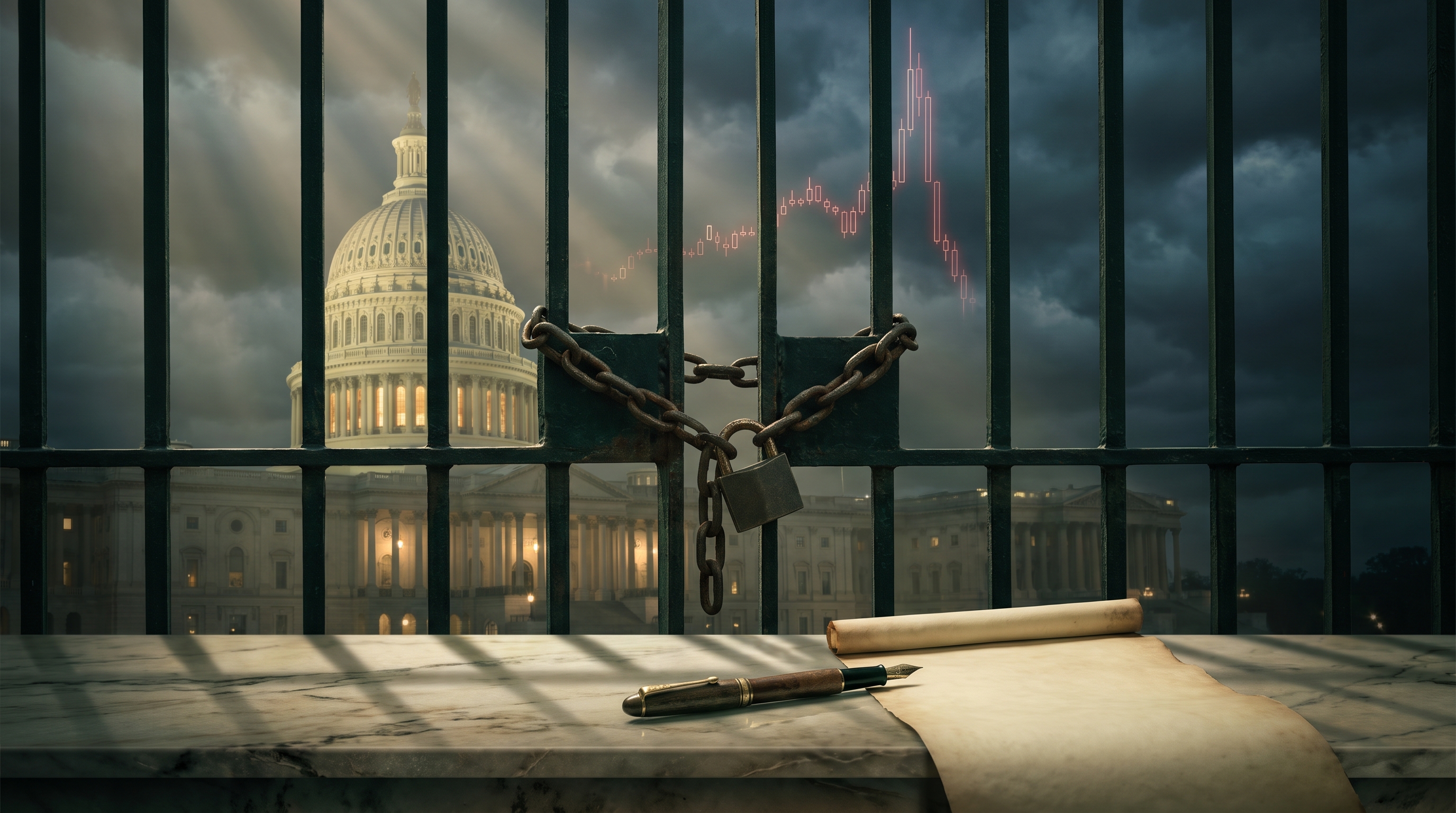
To my community of serious investors, I greet you again in the name of knowledge and financial sovereignty. You have written to me all week with one question, so I will answer it in full and without the diplomatic fog that most commentators hide behind. You asked me whether the CLARITY Act, the law that is supposed to finally give American crypto its rulebook, will be signed soon, or slip to the end of the year, or slide into the next one. And you asked me what I truly think. So here is what I think, with my name on every word of it.
Let us begin with the facts, because a strategist who begins with his feelings deserves to lose his capital. The Digital Asset Market Clarity Act, carried as H.R. 3633, is real, it is serious, and it has already travelled further than any market structure bill before it. The House of Representatives passed it in July 2025 by a strong bipartisan vote of 294 to 134. That was the easy chamber. The hard chamber is the Senate, and the Senate is where the road narrows to a footpath.
On the 14th of May 2026 the Senate Banking Committee advanced its own version of the bill, but the vote tells the real story: 15 to 9, with only two Democrats willing to cross the aisle, Senators Alsobrooks and Gallego. The Senate Agriculture Committee, which shares jurisdiction here, then passed its version along strictly partisan lines. On the first of June the bill was placed on the Senate legislative calendar, which sounds like progress and is in truth a waiting room. As I write this in the second half of July, there is no floor vote scheduled, and no cloture motion has been filed. The signing target that some had circled for the fourth of July came and went with nothing on the desk.
Now hold the one number that governs everything. To pass the Senate floor, a bill like this must clear sixty votes. Two Democrats have shown their hands. That means roughly seven Democratic votes must still be found, and one of the two who already voted yes in committee, Senator Alsobrooks, said in plain words that her committee vote was a vote to keep working, and not a promise to support the bill on the floor. Read that carefully. The people counting the votes do not yet have them.
Why is a law that everyone claims to want still tied to the ground? Because three knots remain, and each one is pulled tighter by the very people who must eventually loosen it.
The first knot is ethics, and it is political, not technical. A bloc of Democrats is demanding conflict of interest provisions aimed at the crypto ventures connected to the President and his family. The Republicans leading the bill call those provisions a poison pill, a rider written not to fix the law but to peel their own votes away. I want you to see this clearly, without partisanship on my side or yours: this is not really a disagreement about how to regulate a blockchain. It is a fight over the President, staged on the floor of a crypto bill, in the year of a midterm election. That is the kind of knot that lawyers do not untie, because it was never tied by lawyers.
The second knot is decentralized finance. The Banking and Agriculture committees still disagree over whether the developers and the front end operators of DeFi must register like regulated intermediaries. One side warns, correctly, that heavy registration will simply push the builders offshore, where American oversight cannot reach them at all. The other side warns, also correctly, that a broad exemption becomes a hole through which bad actors escape. Both fears are legitimate, and legitimate fears on both sides are the hardest to reconcile in a hurry.
The third knot is the stablecoin, and specifically its yield. The banks do not want a digital dollar that pays interest, because a dollar that pays you to hold it competes directly with the deposits that are the lifeblood of a bank. The crypto industry wants exactly that reward. Tangled into this is Section 604 and its language on illicit finance, which the law enforcement lobby continues to fight. Money is patient, but banks lobbying against their own extinction are not, and this knot has been pulled for a year without giving way.
I will grant one point of progress, in fairness. The oldest quarrel of all, the border between the SEC and the CFTC, is the closest thing here to settled. But you do not pass a law on the strength of the argument you have already won. You pass it only when the arguments you are still losing are finally resolved, and these three are not.
Here is the part that most analysts underweight, and it is the part that decides everything. Even if, by some miracle of negotiation, the three knots loosened next week, the law would still have to fight the cruelest opponent in Washington, which is the clock.
The Senate returns from recess and has only a narrow handful of working weeks before it breaks again for the whole of August. That short window is the one that every serious desk in Washington and on Wall Street has named as the last realistic gate for this year. Miss it, and the calendar does not forgive you. September and October are swallowed by government funding fights and the ordinary chaos of a chamber that can only do one large thing at a time. And behind all of it stands November, and the midterm elections, which turn every senator into a candidate and every vote into a campaign advertisement. No senator facing the voters wants to hand the other party a win, or to cast a hard vote on a subject their opponents can distort in thirty seconds.
So even the technical problems that could be solved cannot find a table to be solved on. That is the quiet tragedy of this bill. It is not dying of bad ideas. It is dying of no time.
I am very certain that the CLARITY Act will not be signed into law before next year. I do not say this to be dramatic. I say it because the arithmetic, the politics, and the calendar all point the same way, and when three independent forces agree, a strategist listens.
Let me give you my reasoning in one clean chain, so you can test it against your own judgement rather than simply trust mine. The vote is short by around seven senators, and the two who moved early have already told us not to count them as certain. The one knot that could still be loosened by goodwill, the ethics fight, is not a knot of goodwill at all, it is a proxy battle over the President that neither side has any reason to end before the November election. And the calendar, which is indifferent to how badly the industry wants this, offers only a sliver of time now and a wall of election politics after. Three forces, one direction.
Could there be a surprise in the final weeks of the year, a lame duck attempt after the elections are counted? It is possible, and I never insult my readers by pretending the future is fully known. But a bill this heavy, carrying ethics, DeFi, and stablecoin yield all at once, is not the kind of thing a tired Congress signs in the last cold days of December. My honest base case, the one I am positioning my own thinking around, is that any real signature waits until 2027. If the market has priced roughly a one in three chance of a signing this year, I believe even that modest hope is a shade too generous.
Now to the part that touches your capital directly, because a regulatory essay that never reaches your portfolio is just noise in a nice suit. Understand first why this law mattered to price at all. The great prize of the CLARITY Act was never a single headline. It was permission. It was the legal green light that would finally let the largest institutions, the pension funds and the asset managers who move the real oceans of money, build products around a whole class of digital assets and buy them without fear of an enforcement action arriving after the fact. That permission is the marginal buyer this cycle has been waiting for.
When you delay permission, you do not simply postpone a good day. You remove the buyer whose arrival the market had already begun to lean on. And a market that leans on a buyer who does not come is a market that falls. This is the first effect, and it is the plainer one: the delay is bearish, because it keeps the biggest wallets in the world parked on the sidelines while the rest of us hold up the price on thinner and thinner conviction.
The second effect is more dangerous, and it is the one I most want you to carry away from this letter. It is the bull trap, and this delay is a machine for manufacturing them. Let me show you exactly how the trap is built, because once you can see it, you are far harder to catch.
First comes a headline: a reconciled text is dropping next week, a deal is close, a floor vote may be scheduled. Hope is cheap and it is loud. Price jumps, the charts flash green, and the voices that were silent in the fear now shout that the bottom is in. Late buyers, afraid of missing the turn, pour in near the top of the bounce. Then the vote slips again, as it has slipped all year. The catalyst does not land. And a market that rallied on a promise gives back the whole move and then some, because now it must punish not only the missing buyer but the traders it just lured in. That is a bull trap. It is a rally built on a signature that never arrives.
We are entering a season that will produce these traps one after another, because a stalled bill in a hopeful market is the perfect raw material. Every rumor of a deal will spark a bounce. Every bounce will tempt the impatient. And every slip of the calendar will spring the trap shut. My expectation, stated plainly, is a market that stays under bearish pressure at its base, punctuated by sharp and convincing rallies that fail at the worst possible moment for the people who chased them. Do not confuse the ferocity of a bounce with the truth of a bottom. In a market waiting on a law that is not coming, the most violent green candles are often the most expensive lies.
I will not close a hard letter with despair, because fear is as poor a strategy as greed. A delay is not the end of the thesis. The direction of American law is set even if its date is not, and every honest project we have discussed on these pages, the decentralized ones that hold their users' keys and hide nothing on chain, still sits on the right side of the line the law will eventually draw. What changes is not the destination. It is the patience the journey now demands.
He respects cash as a position, not a defeat, because cash is what lets you buy the fear that the trapped are forced to sell. He does not use leverage into a legislative headline, ever, because leverage is how a bull trap turns a bad week into a ruined year. He treats every relief rally as guilty until proven innocent, and he asks of every green candle one cold question: did anything actually get signed? He keeps his coins in his own custody, because the whole spirit of the winning side of this law is self ownership. And he judges projects by decentralization, open code, and transparency, not by whichever token shouts the loudest that clarity is about to save it.
So watch the true signals and ignore the noise. Watch for a reconciled Senate text that actually holds together, for a cloture motion truly filed, for new Democratic names truly committing on the record. Until you see those, treat the excitement as weather and not as climate. The law will come. I simply do not believe it comes this year, and I would rather you enter the next twelve months clear eyed and solvent than hopeful and trapped.
Stay disciplined, hold your own keys, and let the impatient pay for their impatience. That, in the end, is what our craft has always been.
This is an educational and analytical work by Dr. Antoun Toubia. It is not investment, legal, or tax advice, and it is not a solicitation to buy or sell any asset. The CLARITY Act is United States legislation that is not yet final law, and its status and provisions may change at any time; verify the current facts before acting. The views on timing and on the market are my personal reading and could prove wrong. Nothing here promises that any token will rise or fall in value. Cryptocurrency is highly volatile and you may lose your entire capital. Consult a qualified adviser before making any decision. Your financial sovereignty begins with your personal responsibility.